



Battery Energy Storage Systems
Battery energy storage systems (BESS) are going in across Western Australia, from mine site microgrids and remote communities to commercial buildings and utility-scale sites. Under normal charging and under fault conditions, batteries can release hydrogen. It has no colour, no smell and ignites easily, so the only way to know it is building up is to measure it.
Hinco Instruments supplies the gas detection, battery testing and environmental monitoring instruments used in battery rooms and BESS enclosures, and calibrates them in our Canning Vale workshop or on site. We serve customers across Australia from our Perth, WA base.
Specifying gas detection for a BESS?
Tell us the battery chemistry, the size of the room or enclosure and how it is ventilated. We will help you choose the right detectors.
Looking to buy?
Fixed and portable gas detectors, controllers and flame detectors, plus battery and insulation testers.
Where the hydrogen comes from
Lead-acid and nickel batteries give off hydrogen as a normal part of charging, and much more when they are overcharged or a charger fails. This is why battery rooms have always needed ventilation.
Lithium-ion batteries do not gas in normal use, but when a cell is damaged, overheated or overcharged, it vents a mix of gases that includes hydrogen. That venting often comes before thermal runaway, so detecting it early gives you time to isolate the system before a fire starts.
Why it is dangerous
Flammable at 4%
Hydrogen’s lower explosive limit (LEL) is 4% by volume in air, and it stays flammable all the way up to around 75%. Very little energy is needed to ignite it.
You cannot see or smell it
There is no warning without a detector. A battery room can reach a dangerous level with nobody noticing anything wrong.
It rises and pools
Hydrogen is much lighter than air, so it collects under ceilings, in roof voids and at the top of enclosures, exactly where nobody is standing.
What good hydrogen monitoring looks like
Fixed detectors at high points. Detectors go where hydrogen collects: at ceiling level above the batteries, near the top of each enclosure and close to exhaust points.
Alarms well below the LEL. Alarm levels are set as a percentage of the LEL, with a low alarm that raises the warning early and a high alarm that triggers action. The exact set points come from your site’s risk assessment and the system designer.
Alarms that do something. Detectors connect to a gas controller that can start extra ventilation, stop charging, isolate the batteries and alert people on site or remotely.
Portable detectors for people. Technicians entering a battery room or opening an enclosure should carry a portable gas detector, even when fixed detection is installed.
The batteries themselves. Regular battery resistance and insulation testing picks up failing cells and wiring faults before they start to gas, and temperature monitoring in the room catches the conditions that age batteries early.
In Australia, AS/NZS 5139 covers the installation of battery systems and AS 2676 covers battery room ventilation and housing, and NFPA 855 is widely referenced for larger systems. Your system designer will confirm which apply to your installation.
Instruments we supply for battery energy storage
Gas detection, controllers, battery testers and room monitoring. Ask us about hydrogen sensor options for each detector.
-

Crowcon Xgard IQ Fixed Gas Detector
CrowconXgardIQ is an intelligent and versatile fixed detector and transmitter. Its remote sensor and universal transmitter means you have access to Crowcon’s full range of sensor technologies and improved detection. With its sensor range selection capabilities it means users can set the full-scale range of the sensor according to specific location requirements.
Download PDF Read more -

Crowcon Xgard Bright Fixed Gas Detector
CrowconThe Crowcon Xgard Bright is an addressable fixed-point Gas Detector with a large OLED display and non-intrusive calibration. It combines 4-20mA, Modbus and optional HART over a 4-wire addressable design, with onboard alarm and fault relays for fast, low-maintenance installation.
Read more -

Crowcon Vortex Gas Controller
CrowconVortex is Crowcon’s most flexible gas controller package that can be customised to meet your site requirements, however complex, without the need for extensive cabling. Capable of monitoring up to 12 channels, continuous relays provide flexible and customisable control of your entire site.
Download PDF Read more -

Crowcon Gas-Pro Personal Gas Detector
CrowconThe Crowcon Gas-Pro 5-gas Personal Gas Detector detects up to 5 gases, features an easy-to-see top mount display, and is built to last with an anti-shock case. It offers flexible monitoring options and is the ultimate confined space solution for your team’s safety.
Download PDF Read more -

Major Tech MT247 Bluetooth Battery Resistance Tester
$1,455.00 Major TechBattery internal resistance tester for lead-acid, gel and lithium batteries. Measures internal resistance, voltage and temperature via an AC injection method, with PASS/WARNING/FAIL thresholds, data storage, USB and Bluetooth.
Download PDF Add to cart -
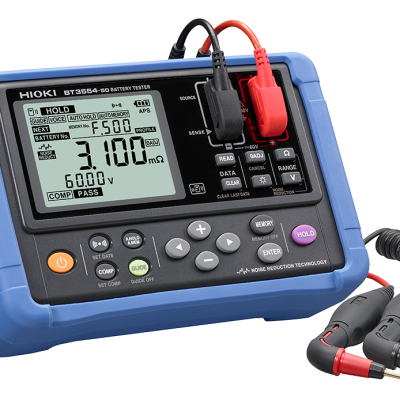
HIOKI BT3554-52 Battery Tester (L2020 Lead) – UPS Battery Test
HiokiThe HIOKI BT3554-52 Battery Tester provides fast internal resistance and voltage diagnostics for UPS and lead-acid batteries. Supplied with the L2020 L-shaped pin-type lead, designed to reach deep into dense battery racks.
Read more -
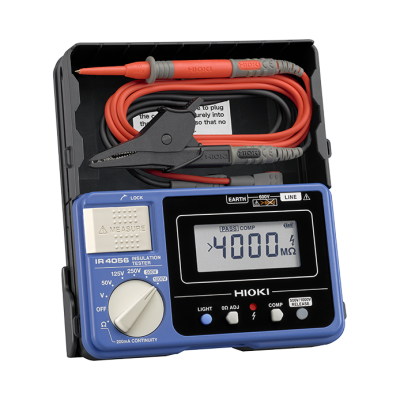
HIOKI IR4056-20 Insulation Tester 1kV – Digital Megohmmeter
HiokiThe HIOKI IR4056-20 is a digital 1,000 V insulation tester measuring up to 4,000 MΩ. Its auto-discharge function safely dissipates stored charge after testing, making it a dependable tool for motor, cable, and transformer insulation verification.
Read more -

Vaisala HMT120 and HMT130 Humidity and Temperature Transmitters
VaisalaVaisala HMT120/HMT130 Humidity and Temperature Transmitters offer precise readings with reliability and dust resistance. Equipped with interchangeable probes for easy calibration, these transmitters are ideal for data centers, cleanrooms, and HVAC systems.
Download PDF Read more
Shop by range: Gas Detectors, Test and Measurement, Major Tech, HIOKI, Vaisala and Crowcon.
Common questions about BESS gas detection
Do lithium-ion battery systems need hydrogen detection?
Lithium-ion cells do not gas in normal use, but a cell that is failing vents hydrogen and other flammable gases, often before thermal runaway. Detecting that off-gassing early is why many designers fit gas detection to lithium-ion systems. Your design standard and risk assessment decide what is required.
Where should hydrogen detectors be mounted?
High up. Hydrogen is much lighter than air, so detectors go at ceiling level above the batteries, near the top of each enclosure and close to exhaust points, not at breathing height.
How often should the detectors be calibrated?
Follow the manufacturer’s interval, which for most fixed gas detectors is at least every six months, with bump tests in between to prove they respond. See gas detector calibration.
Keeping detection reliable
A gas detector that has drifted still shows a reading, so a battery room can look safe when it is not. Detectors need regular bump testing to prove they respond, and calibration against certified gas to prove the reading is right.
We provide gas detector calibration for portable and fixed detectors, electrical test equipment calibration for your battery and insulation testers, and on-site calibration for fixed systems anywhere in WA.
BESS projects often sit alongside mine site microgrids, oil and gas facilities and government and utility infrastructure, and many data centres run large UPS battery rooms. See all the industries we serve, or call 08 9455 6777.
Talk to us about BESS gas detection
Tell us the battery chemistry, the room or enclosure size and whether you need new detectors, calibration or both.
Speak With a Calibration Technician
Prefer to call? 08 9455 6777, 8am to 4pm, Monday to Friday.