



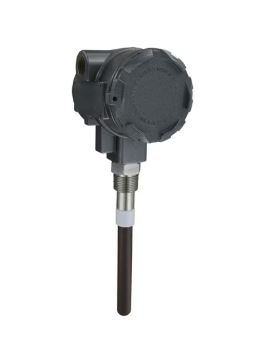
DwyerOmega PMT2 Particulate Transmitter
The DwyerOmega PMT2 Particulate Transmitter measures particulate emissions levels from dust collector discharge. DC-coupled electrostatic induction sensing tech provides accurate results. Applications: Emissions monitoring, Broken bag detection in dust collectors, Filter leak or wear detection, Bin vent monitoring.
The DwyerOmega PMT2 Particulate Transmitter, available from Hinco Instruments, measures particulate emission levels from dust collector discharge systems. It uses DC-coupled electrostatic induction sensing technology to detect particulate passing near the probe.
As particles pass the probe, the transmitter measures a picoamp (pA) current and converts it into a 4–20 mA output signal. The signal level changes in proportion to the particulate concentration. The PMT2 offers six sensitivity ranges, allowing users to select the best range for each application.
A range and test selector switch allows the transmitter to output a fixed 4 mA or 20 mA signal. This feature helps with setup and troubleshooting. Users can also apply an averaging time setting to smooth the signal when required. For more details please see the PDF attachment.
Related products
-

DwyerOmega FLR D Series Flow Meter
DwyerOmegaThe DwyerOmega FLR D Series Flow Meter with rugged In-Line Flow Sensors available in 1/2″, 3/4″, and 1-1/4″ with anodized aluminum, brass and/or stainless steel flow cartridges. Comes with 4.5 m of stripped end integral cable.
Download PDF Read more -

DwyerOmega DR Direct Reading Glass Flow Meter
DwyerOmegaThe DwyerOmega DR Direct Reading Glass Flow Meter accurately measures air or water flow rates. It includes a fused ceramic scale with float guides and a reflective plastic background. Shipped fully assembled, it’s easy to install and versatile for various applications.
Download PDF Read more -

DwyerOmega 616KX Differential Pressure Transmitters
DwyerOmegaThe DwyerOmega 616KX Differential Pressure Transmitter delivers high accuracy (±0.25% to ±2.0%) in a compact, cost-effective design. Features include push-button zero adjustment, field-selectable output signals, and flexible process connections. Ideal for air handlers, duct pressure, and filter monitoring.
Download PDF Read more